

Moving Averages: What They Show You
How moving averages smooth out price noise and reveal trend direction. We'll cover simple and exponential averages.
Understanding how price bands reveal market volatility and what extreme movements can tell you about potential trading opportunities.
Bollinger Bands are one of the most practical tools for understanding market volatility. They're not trying to predict the future or guarantee anything — they simply show you when prices are behaving unusually. The bands move wider when volatility increases and narrow when the market settles down. That's incredibly useful information if you're trying to understand what's happening right now.
Created by John Bollinger in the 1980s, these bands have become a staple for traders and analysts worldwide. They're straightforward to understand once you see how they work. Three lines on your chart tell a complete story about market conditions.

Bollinger Bands consist of three components. The middle line is a 20-period moving average — it's just the average price over the last 20 trading days. This gives you the baseline. Then there are two outer bands, positioned 2 standard deviations above and below that middle line. Don't let the math intimidate you. Standard deviation just measures how much prices are bouncing around.
When the market's calm, the bands are close together. When volatility spikes, they expand outward. It's that simple. The upper band often acts as resistance, and the lower band often acts as support. But here's what makes them valuable — the bands adjust automatically. You don't need to manually recalculate anything. Your charting software handles it all.


Here's where Bollinger Bands really shine. They visually show you volatility without requiring you to calculate anything. When prices move dramatically — big daily swings — the bands expand. When the market becomes quiet and prices consolidate, the bands squeeze together. You're seeing volatility in real time on your chart.
This is incredibly valuable because volatility isn't constant. Some days the market's moving 50 points, other days 500. Bollinger Bands adapt instantly. You don't have to guess whether volatility is high or low — the visual gap between the bands tells you immediately. A squeeze often precedes a breakout, meaning the market's gathering energy for a big move.
Most traders watch for band squeezes specifically. When the bands get very narrow, something's about to happen. It might not happen today, but compressed volatility eventually releases. That's why so many technical analysts keep Bollinger Bands on their charts — they're signaling when the market's holding its breath.
When price touches or moves beyond the upper band, it doesn't mean "buy" or "sell." That's a common misconception. It means price has moved to an extreme — it's statistical outlier territory. About 5% of the time, prices should touch the outer bands in a normal market. When they do, something notable is happening.
Some traders interpret an upper band touch as "overbought" — meaning the move upward has been aggressive and might be due for a pullback. A lower band touch might suggest "oversold" conditions. But context matters enormously. In a strong uptrend, prices can stay near the upper band for weeks. In a downtrend, they can hover near the lower band. The bands aren't prediction tools. They're descriptive. They're showing you what's happening, not what's about to happen.
The real insight comes from combining band information with other signals. You're looking for patterns. Does price bounce off the bands repeatedly? Does it walk along one band while trending? Those observations give you clues about market structure and strength.
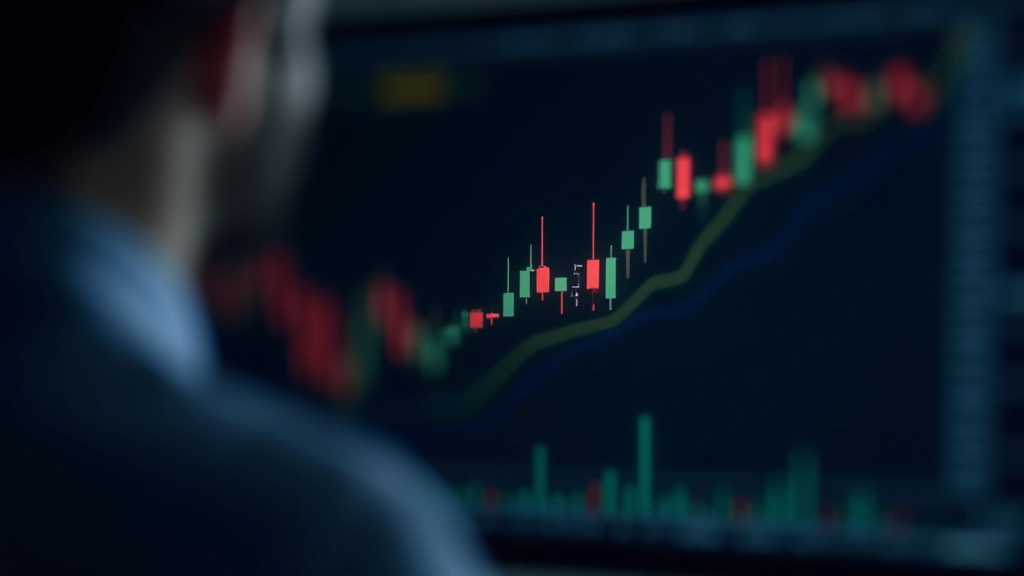
The most straightforward use is simple observation. Look at your chart over the last few months. Notice how the bands widen and narrow. You're literally watching volatility expand and contract. That's useful information. You understand whether the market's been quiet or active.
Wide bands = high volatility. Narrow bands = low volatility. Use this to understand whether you're trading in a calm market or a chaotic one. Your approach might differ depending on volatility levels.
The outer bands often act as natural support and resistance. Prices bouncing off the bands repeatedly suggest the bands are meaningful. But always look at what the price is actually doing, not just the bands alone.
When bands compress significantly, the market is quiet and volatility is low. Traders often watch for band squeezes because they often precede significant price moves. It's energy building.
In an uptrend, price often stays in the upper half of the bands. In a downtrend, price tends to stay in the lower half. This reinforces what you're already seeing in the price action.
The key is not to rely on Bollinger Bands alone. They're one tool among many. Combine them with price action observation, volume analysis, and other indicators. That's how you build a complete picture of what's happening in the market.
Bollinger Bands measure volatility through expanding and contracting bands around a moving average. Wide bands indicate high volatility, narrow bands indicate low volatility. The bands aren't predictive — they're descriptive. They show you what's happening in the market right now. When prices touch the outer bands, something extreme is occurring, but that doesn't automatically mean a reversal is coming. Context and price action matter most. The most practical use is simple: understanding volatility levels and watching for band squeezes that often precede larger moves.
Start by adding Bollinger Bands to your charts with default settings — 20-period moving average with 2 standard deviations. Watch how they behave over different market conditions. You'll quickly develop intuition about what tight bands versus wide bands mean. Then combine this observation with other technical analysis tools. That's how you build genuine understanding of market structure and behavior.

This article is educational information only. Bollinger Bands are a technical analysis tool designed to help you understand market volatility and price behavior. They are not trading signals, investment advice, or recommendations to buy or sell. Technical analysis doesn't guarantee future results, and no indicator works perfectly in all market conditions. Market conditions, economic factors, and unexpected events can all affect prices in ways technical tools cannot predict. Always conduct your own research, consider your risk tolerance, and consult with financial professionals before making trading or investment decisions. Past performance does not indicate future results.